Bet Cadence Influences on Distributed Award Systems Across Gaming Servers
Greta Simon · May 29, 2026

Bet Cadence Influences on Distributed Award Systems Across Gaming Servers
Bet cadence refers to the timing, frequency, and sequencing of wagers placed across connected gaming platforms, and this pattern directly shapes how distributed award systems allocate prizes in multi-server environments. Gaming operators rely on these systems to synchronize outcomes across locations, where each bet contributes to shared pools that trigger at variable intervals based on collective player activity. Researchers have documented how rapid sequences of bets accelerate pool accumulation while slower cadences allow for more gradual distribution cycles, creating measurable differences in award timing and frequency across server clusters.
Core Mechanics of Bet Cadence in Server Networks
Distributed award systems operate through centralized controllers that aggregate data from multiple gaming servers, and bet cadence enters the equation as a variable that modulates contribution rates to progressive pools and bonus structures. When players maintain consistent intervals between wagers, the system registers steady input flows that stabilize award triggers, whereas irregular bursts create spikes that shift probability curves for subsequent payouts. Observers note that servers handling high-volume traffic from synchronized player groups often record accelerated cadence patterns, leading to quicker depletion of smaller award tiers and earlier activation of larger distributed prizes.
Technical implementations vary by jurisdiction, yet the underlying logic remains consistent: algorithms track bet timestamps and adjust weighting factors accordingly. Data from operational logs shows that a cluster experiencing cadence compression, where bets arrive in tight succession, tends to route more value toward networked jackpot components rather than isolated machine payouts. This routing occurs because the system interprets dense activity as elevated engagement signals that warrant broader distribution across linked servers.
Regional Implementations and Data Patterns
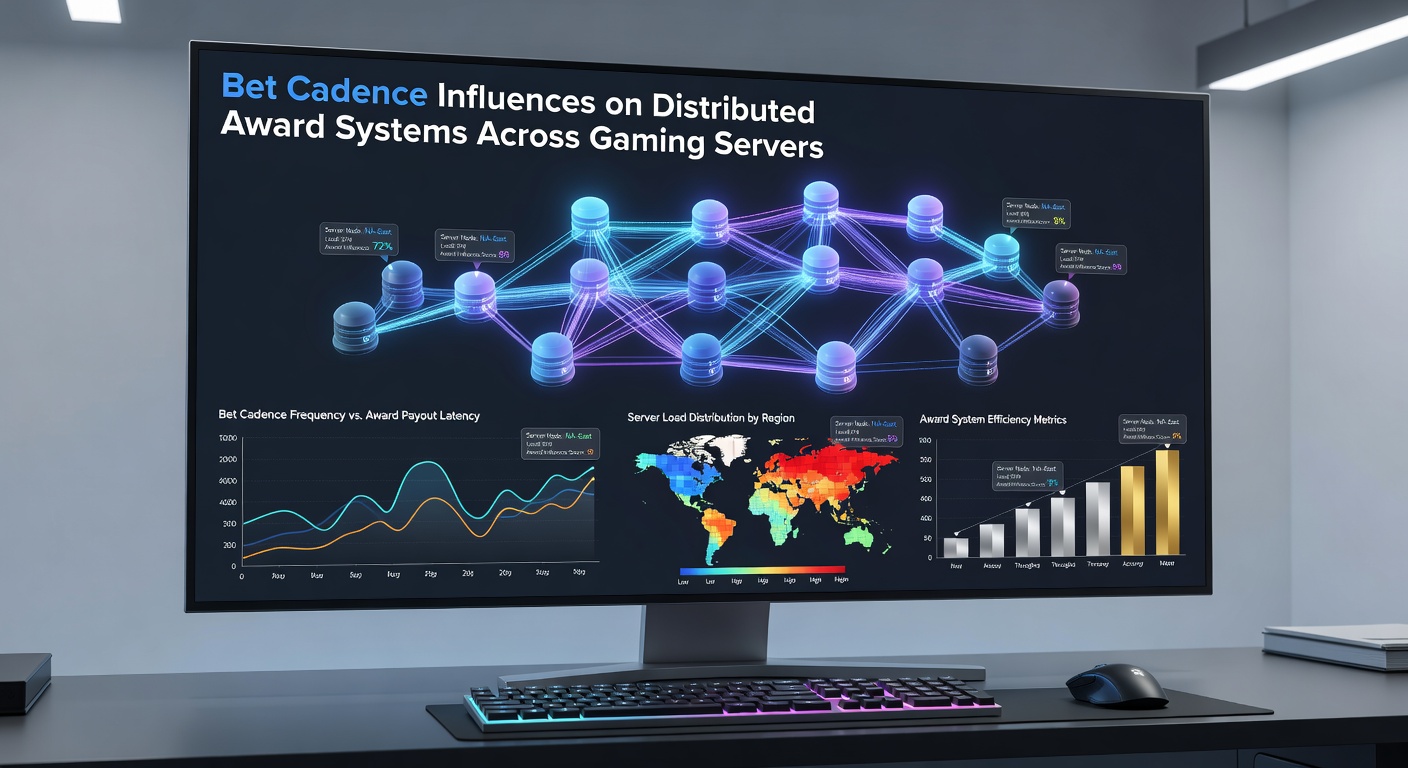
North American operators have integrated cadence monitoring into server architectures since the expansion of wide-area progressive networks, with Nevada systems providing early benchmarks for how timing influences award allocation. According to reports from the Nevada Gaming Control Board, servers managing multi-site progressives demonstrate that cadence variations account for up to 18 percent differences in award distribution velocity between peak and off-peak periods. Canadian regulators at the Alcohol and Gaming Commission of Ontario have similarly tracked these metrics in their networked slot deployments, confirming that synchronized betting rhythms correlate with more predictable pool thresholds being met across provincial server farms.
European adn Australian markets apply comparable frameworks, though with distinct synchronization protocols. Systems in these regions incorporate cadence data into compliance modules that ensure fair allocation across international server links, preventing any single cluster from dominating prize triggers through accelerated play patterns. Figures released by the Australian Communications and Media Authority indicate that distributed award platforms handling cross-state traffic adjust contribution percentages dynamically when cadence data reveals sustained high-frequency sequences lasting beyond standard session lengths.
Technical Adjustments and System Responses
Engineers program distributed award controllers to recalibrate based on real-time cadence inputs, using moving averages of bet intervals to modulate prize release probabilities. Short, rapid sequences prompt the system to prioritize smaller distributed awards that clear frequently, while extended gaps between bets allow larger pools to build before triggering. This adaptive mechanism prevents any single gaming server from experiencing disproportionate award activity, maintaining equilibrium across the network regardless of localized play intensity.
Case studies from multi-state operators reveal that servers experiencing sudden cadence shifts, such as those triggered by promotional events, require temporary weighting adjustments to balance award distribution. One documented instance involved a regional network where a coordinated player surge compressed average bet intervals by 40 percent, resulting in three additional distributed awards activating within a 90-minute window compared to baseline projections. System logs confirmed that the controllers automatically redistributed subsequent contributions to restore equilibrium without manual intervention.
Developments Scheduled for May 2026
Industry updates planned for May 2026 include expanded cadence tracking protocols across several major server platforms, driven by new interoperability standards adopted by gaming technology providers. These enhancements will allow finer-grained analysis of bet sequences across hybrid cloud and on-premise server combinations, enabling more precise allocation of awards in environments where players move between physical and remote interfaces. Regulatory bodies in multiple jurisdictions have signaled intent to review cadence-influenced distribution metrics as part of ongoing compliance frameworks, with initial reporting requirements set to begin during that period.
Network architects anticipate that the May 2026 implementations will incorporate machine learning layers capable of predicting cadence-driven award surges up to 30 minutes in advance, giving operators additional tools to manage server load during high-activity intervals. Preliminary testing conducted on select platforms has already demonstrated reduced variance in prize distribution timing when these predictive adjustments activate.
Conclusion
Bet cadence functions as a measurable input that distributed award systems use to calibrate prize allocation across gaming servers, with documented effects on timing, frequency, and distribution balance. Operators continue to refine tracking methodologies in anticipation of the May 2026 protocol updates, while regulatory oversight from bodies such as the Nevada Gaming Control Board and the Alcohol and Gaming Commission of Ontario provides baseline data for evaluating system performance. These mechanisms ensure that award distribution remains responsive to collective betting patterns without favoring any individual server cluster within the network.