Participation Rhythms Driving Prize Escalation in Unified Digital Gaming Frameworks
Riley Brooks · Aug 26, 2026

Participation Rhythms Driving Prize Escalation in Unified Digital Gaming Frameworks
Unified digital gaming frameworks connect slot machines and online terminals across multiple venues into single prize pools that grow through collective participation, and data from these systems show how the timing and frequency of player bets directly influence escalation rates in jackpot amounts. Operators track participation rhythms through server logs that record bet intervals, session lengths, and geographic distribution of activity, which allows precise mapping of how individual wagers feed into larger prize structures.
Core Mechanics of Rhythmic Contribution
Each wager placed in a linked network increments the prize pool by a fixed percentage, yet the speed of escalation depends on the density of bets within short time windows, because clustered activity from multiple users accelerates the rate at which thresholds are crossed and visible prize jumps occur. Systems record these patterns at millisecond resolution, revealing that periods of synchronized high-frequency betting produce steeper upward curves in prize values compared with evenly spaced individual contributions spread across longer durations.
Data Patterns Across Networked Platforms
Platform operators compile aggregated statistics that demonstrate correlations between peak participation clusters and accelerated prize growth phases, and these records indicate that frameworks spanning several jurisdictions experience faster escalation when regional time zones align during evening hours. Research from the American Gaming Association highlights how centralized servers monitor these rhythms to adjust contribution rates dynamically, maintaining balance while responding to observed activity surges.
Figures released in August 2026 from multi-state networks confirmed that participation density during holiday weekends generated prize increases up to 40 percent higher than baseline weekday averages, because the volume of concurrent sessions compressed the time needed to reach escalation milestones. Analysts note that these rhythms also affect distribution across game types, with video slots showing stronger sensitivity to rapid bet sequences than table-based terminals integrated into the same unified pools.
Influence of Session Timing on Prize Thresholds
Session duration data collected from unified frameworks reveal that shorter, repeated logins spaced throughout a day contribute to steadier prize climbs than single extended sessions, since each new connection restarts contribution timers and refreshes the pool with fresh increments. Observers tracking these metrics across Canadian provincial networks found that staggered participation from different user cohorts prevents stagnation in growth curves and sustains momentum toward higher prize tiers.
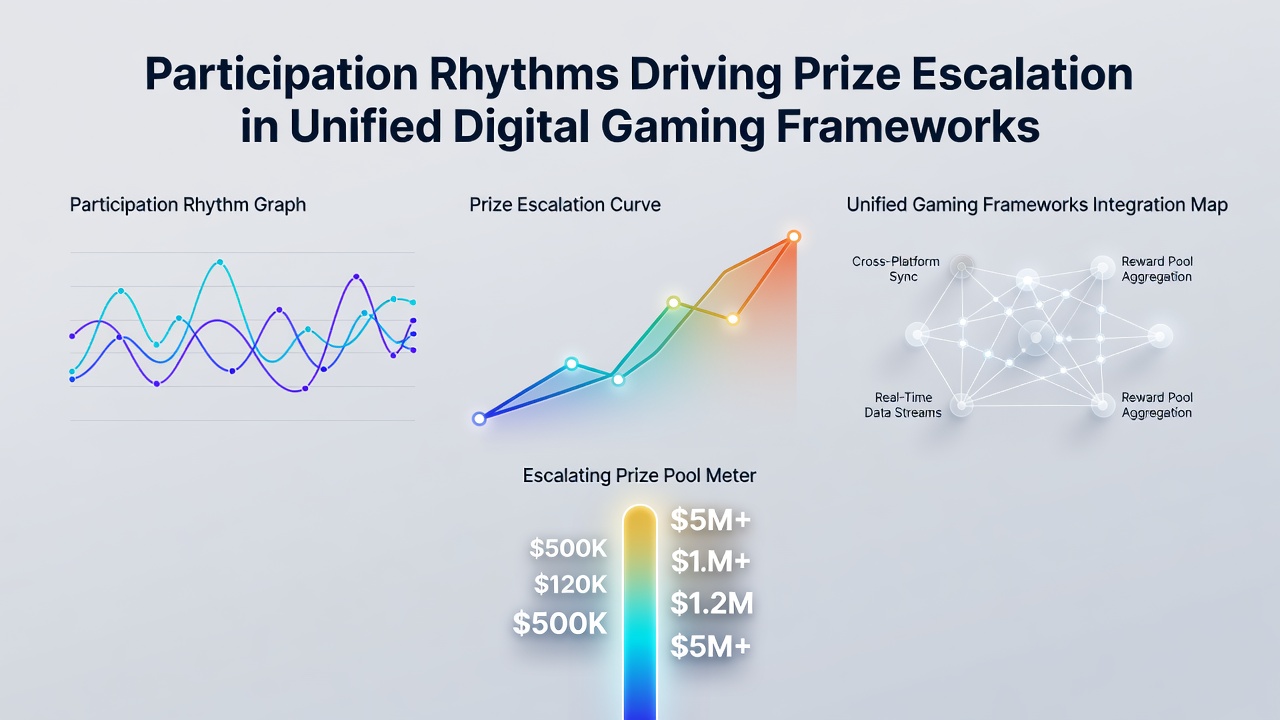
Engineers designing these systems incorporate algorithms that weight recent participation more heavily than older activity, which means a surge in active terminals during a concentrated window produces larger visible escalations than equivalent bets distributed over time. This weighting mechanism ensures that frameworks remain responsive to current rhythms while preserving historical contributions in the overall pool calculation.
Regional Variations and Framework Adaptations
European regulatory reports from bodies such as the Australian Communications and Media Authority document how unified platforms adjust contribution percentages based on observed participation density across member sites, and these adjustments help stabilize prize growth when activity rhythms fluctuate due to seasonal or promotional factors. Data collected in 2026 showed that frameworks operating across multiple continents required localized calibration to account for differing peak hours and cultural betting patterns.
Technical audits of these networks confirm that real-time monitoring of bet frequency allows operators to predict when prize thresholds will be crossed, enabling advance communication to players without revealing proprietary algorithms. Such predictive capabilities stem directly from accumulated rhythm data rather than external forecasts.
Conclusion
Participation rhythms in unified digital gaming frameworks function as measurable inputs that determine the pace and magnitude of prize escalation through documented correlations between bet timing, session clustering, and pool growth rates. Continued collection of these metrics across expanding networks provides operators with the information needed to maintain system integrity while responding to actual activity patterns observed in August 2026 and beyond.